
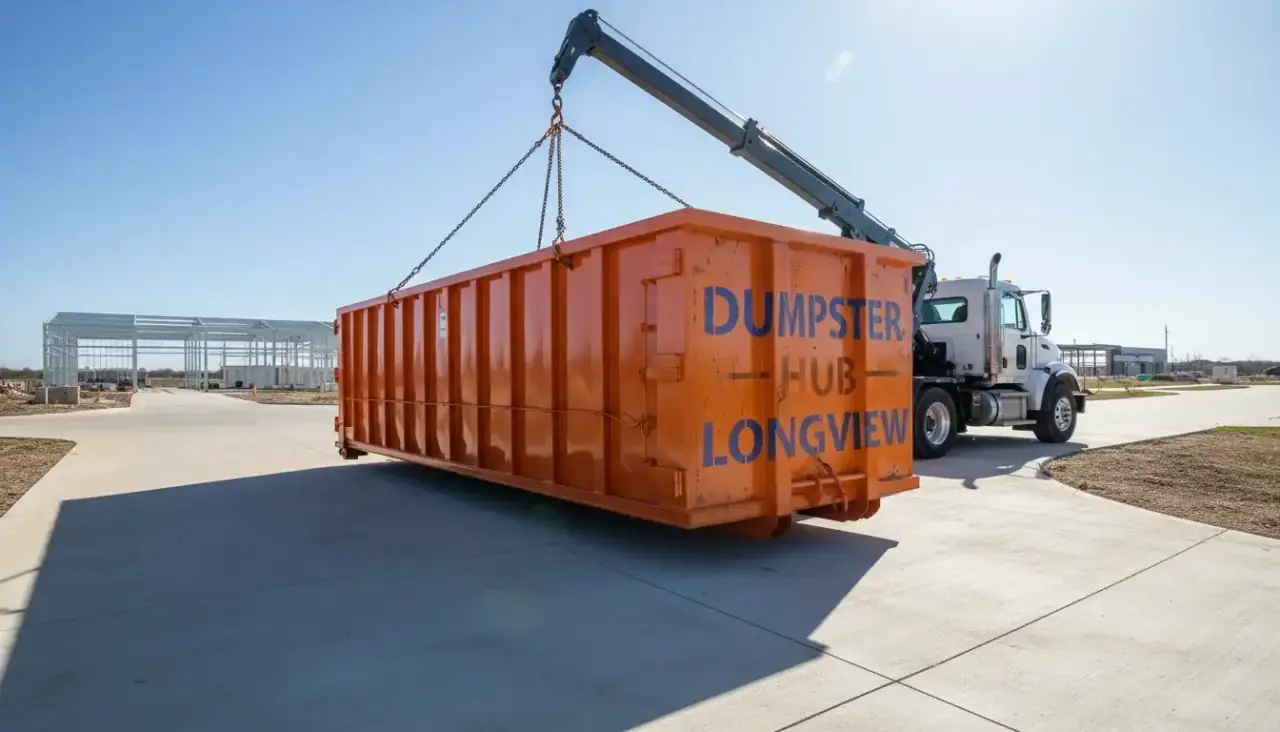
This dumpster rental guide for Longview, TX covers what first-time renters typically do not know until they are already mid-project. The process itself is simpler than most people expect. The part that causes the most confusion is sizing — picking a container that handles your volume without paying for unused space, while staying under the weight allowance for what you are loading. This guide covers what first-time renters in the Longview area typically do not know until they are already in the middle of a project.
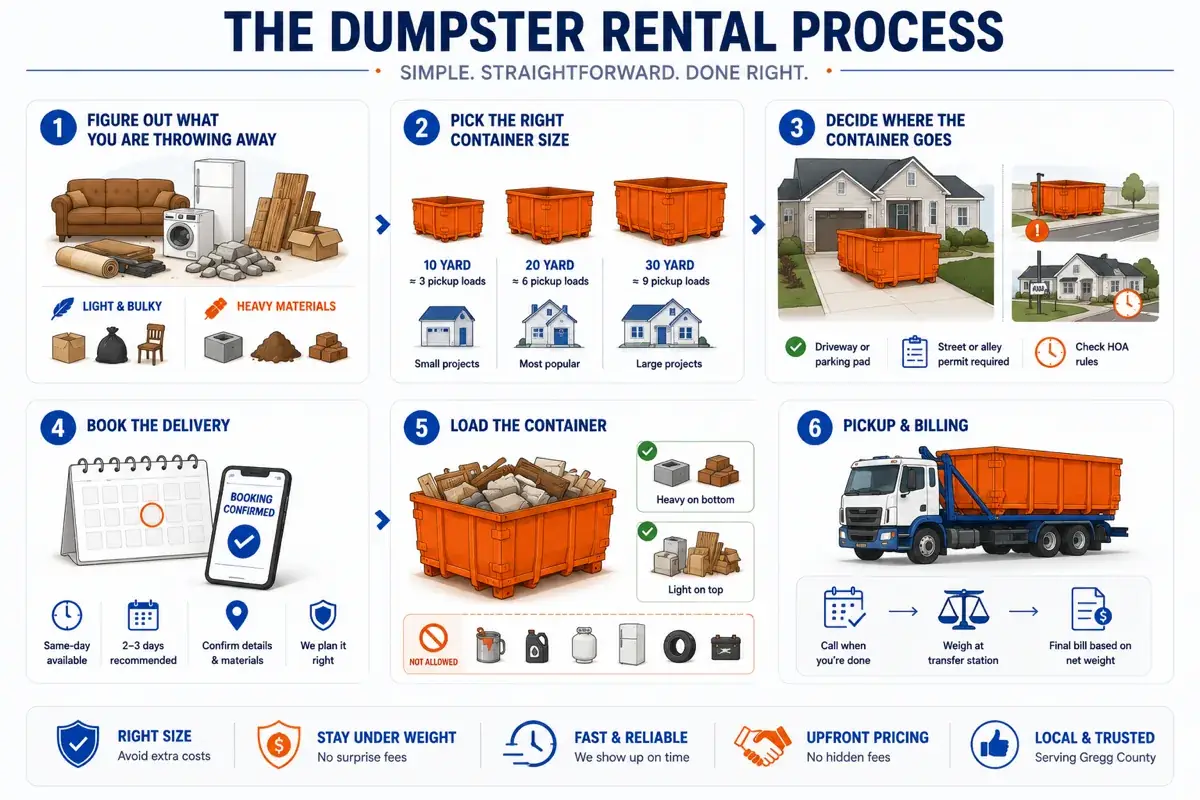
Step 1: Figure out what you are throwing away
Before picking a size, spend 10 minutes thinking about what is actually going in the container. Not in general terms — specifically. How many pieces of furniture? What type of flooring is coming out? Is there concrete, tile, or plaster in the mix? Are there appliances? Outbuildings?
Two factors drive the cost of a rental: volume (cubic yards) and weight (tons). Most residential debris — furniture, household junk, light wood, drywall — is light and bulky. The container fills up before it gets heavy. Heavy materials — concrete, shingles, plaster, soil — are the opposite: they can push a container past its weight allowance when it is only a fraction full by volume.
Identifying the heavy materials before you call lets us advise you accurately on sizing and helps avoid overage charges at the landfill.
Step 2: Pick the right container size
How to rent a dumpster in Longview TX — choosing the right size for your project
Residential roll-off containers in Gregg County typically come in three sizes:
10-yard container — the smallest option, roughly equivalent to three pickup truck loads. Good for a single-room cleanout, a small garage, light junk removal, or a small roofing job on a shed. Not ideal for whole-home projects.
20-yard container — the most versatile residential size. Handles a complete one-to-two bedroom home cleanout, a kitchen or bathroom renovation, a mid-size roofing job, or a two-car garage cleanout. This is the right size for the majority of residential projects in Longview.
30-yard container — the largest standard residential option, roughly equivalent to nine pickup truck loads. Used for full estate cleanouts, large renovation projects, major roofing jobs on larger homes, and any project where multiple rooms, structures, or significant appliances are involved. When you are unsure between a 20 and a 30, take the 30 — the cost difference is smaller than the cost of ordering a second container.
See the weight limits guide for how specific materials affect the size and weight calculation.
Container Size Estimator
Not sure which size you need?
Answer two questions for a starting recommendation.
Step 3: Decide where the container goes
The delivery driver needs a clear, accessible location with overhead clearance for the truck. Typical delivery spots are driveways, parking pads, or a cleared section of yard. The container sits flat and requires a stable surface — concrete driveways and gravel pads work well; very soft soil, sloped surfaces, and narrow gated entries can be a problem.
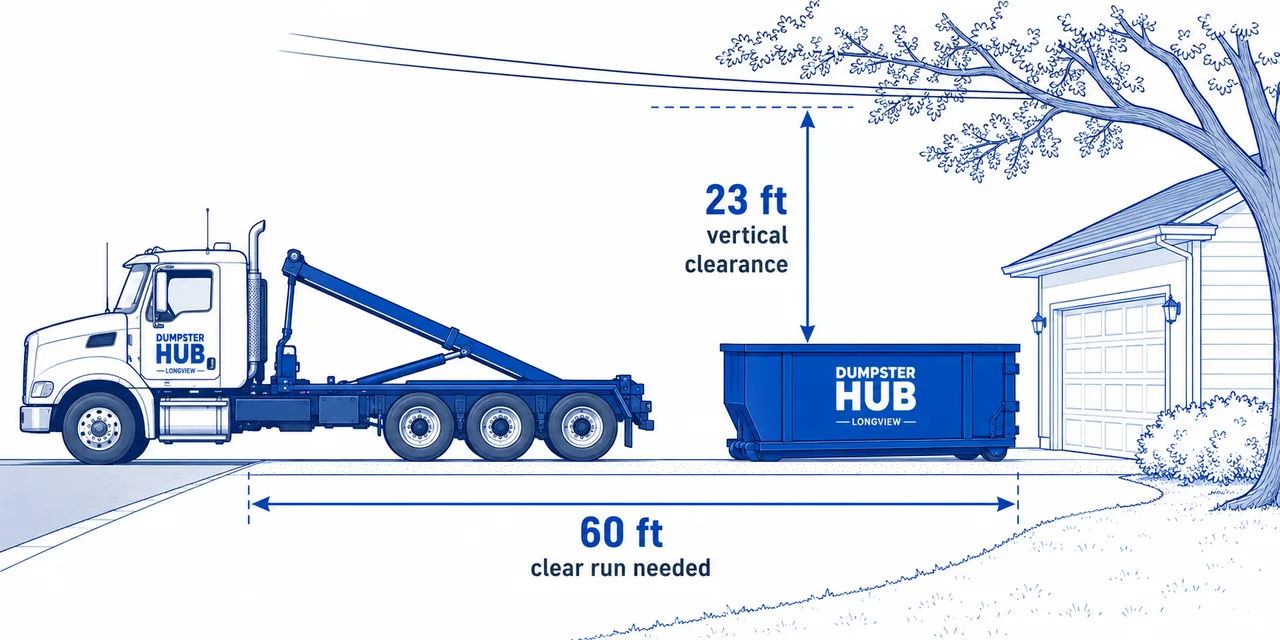
If the only available placement is in the street or alley, a right-of-way permit from the City of Longview is required before delivery. See the permit guide for details on the process.
If your property is in a neighborhood with a homeowners association, check HOA rules before scheduling delivery. Many Longview subdivisions — particularly in Spring Hill, Hallsville, and White Oak — restrict how long a container can sit in a driveway, commonly 48 to 72 hours without prior HOA approval. Some allow up to 7 days with a written request. HOA fines for violations arrive after the job is done, so a quick check before booking is worth the two minutes it takes.
Protective boards are placed under the container rails as standard on every delivery — no need to request them. The steel base of a roll-off container can scuff concrete and will mark up asphalt in warm East Texas weather. Planks prevent most surface contact issues and are a standard accommodation.
Step 4: Book the delivery
Same-day delivery is available for orders placed before noon. For a specific start date, booking 2 to 3 days in advance is advisable. After storm events in Gregg County, availability tightens quickly — call early. When you book your dumpster rental in Longview, TX, confirm: container size, delivery address, placement location, and the type of material being loaded so we can flag any weight considerations.
Full guide: How to Order a Dumpster →
Step 5: Load the container
Do not fill above the top rail — overloaded containers cannot be hauled safely. Heavy material (concrete, tile, masonry) goes in first on the bottom; lighter material on top. Keep restricted materials out: liquid paint, motor oil, propane, refrigerant appliances, electronics, tires, and batteries.
Full guide: How to Correctly Fill a Dumpster →
Step 6: Pickup and billing
Standard rental is 7 days — call when you are done loading to schedule pickup. The container is weighed at Pine Hill Landfill; if the net weight exceeds your included allowance, overage charges apply at the per-ton rate disclosed before delivery. Extended rental is available if your project runs longer, prorated by day.
Full guide: Dumpster Rental Pricing →
Dumpster Rental Tips for Longview TX — Gregg County Considerations
The older housing stock in central Longview — homes built in the 1950s through 1970s in neighborhoods like Fredonia Hill and Spring Hill — often has plaster walls rather than drywall and cast iron plumbing fixtures rather than PVC. Both are significantly heavier than their modern equivalents. If you are renovating an older home in these neighborhoods, factor the weight of plaster and cast iron into your container size decision before the project starts.
Rural properties east of Loop 281 frequently have outbuildings — workshops, barns, storage sheds — that add significantly to the volume of an estate or cleanout project. What looks like a house cleanout often turns into a house plus two outbuildings worth of material. If the property has structures beyond the main house, plan for more capacity than the house alone would suggest.
This dumpster rental guide for Longview, TX covers the steps that first-time renters most often skip — debris assessment, weight planning, placement clearance, and what to have ready when you call. Knowing how to rent a dumpster in Longview TX means understanding your debris type before you pick a container size, not after the driver drops the container. When you are ready to move forward, call and describe the project — sizing it correctly on the first call avoids the most common extra charges and scheduling delays in Gregg County.
Frequently Asked Questions
How long can I keep a rented dumpster?
Standard rental period is 7 days. Extended rentals are available for projects that need more time — estate cleanouts coordinated from out of town, renovation projects with a slower timeline, or insurance situations where the cleanup schedule depends on adjuster visits. Extended rental fees are prorated by day and disclosed at booking.
What size dumpster do I need for a home cleanout?
A 10-yard handles small cleanouts — one room, a small garage, or light junk removal. A 20-yard handles a typical whole-home cleanout with furniture and household items. A 30-yard is the right choice for a full estate cleanout, large renovation, or when significant appliances or outbuildings are included. When you are between sizes, go larger — the cost of a second container is almost always more than the upgrade.
How early should I schedule a dumpster delivery in Longview, TX?
Same-day delivery is available for orders before noon. For a specific delivery date, booking 2 to 3 days in advance is advisable. After storm events in Gregg County, availability tightens across all rental companies simultaneously — call as early as possible after storm damage occurs to secure a spot on the schedule.
Can I move the dumpster after it is delivered?
No. Roll-off containers cannot be moved by the renter after placement. The container is heavy and the steel base will damage any surface it is dragged across. If the placement needs to change, call us — there is a fee for the truck to return and reposition.