
Dumpster Rental Help
Dumpster Rental FAQs in Longview TX — Common Questions
46 questions covering pricing, container sizes, what you can load, Gregg County regulations, and what happens at pickup — organized so you can get to the right answer fast.
Common Dumpster Rental Questions in Longview, TX, by Topic
This dumpster rental FAQ covers 46 common dumpster rental questions across pricing, container sizes, prohibited items, Gregg County regulations, and what happens at pickup. Use the category nav above to jump to the section most relevant to your project, or read through from the top.
Ordering & Delivery
How do I order a dumpster rental in Longview, TX?
Call us or book online. For every dumpster rental in Longview, TX, we confirm your debris type, estimate the volume, recommend the right container size, and set the delivery window, same day if needed. Most bookings take under five minutes. Have the delivery address, debris type, and a rough estimate of how much you have ready when you call.
The full booking process is covered in our how to order guide.
Do you offer same-day dumpster delivery in Longview?
Yes. Same-day delivery is available across Longview and Gregg County when you call before midday. We route deliveries throughout the county daily. Call early and we will fit your delivery into the same-day schedule if capacity allows.
Same-day availability is not guaranteed but is a consistent option for the Longview area. Rural addresses may require next-day scheduling — call to confirm.
What areas in Gregg County do you serve?
We deliver throughout Gregg County — Longview, White Oak, Hallsville, Gladewater — and extend service to neighboring areas including Kilgore, Henderson, Marshall, and Overton.
Call with your zip code to confirm delivery availability and timing for your specific address.
What do I need to prepare before the dumpster is delivered?
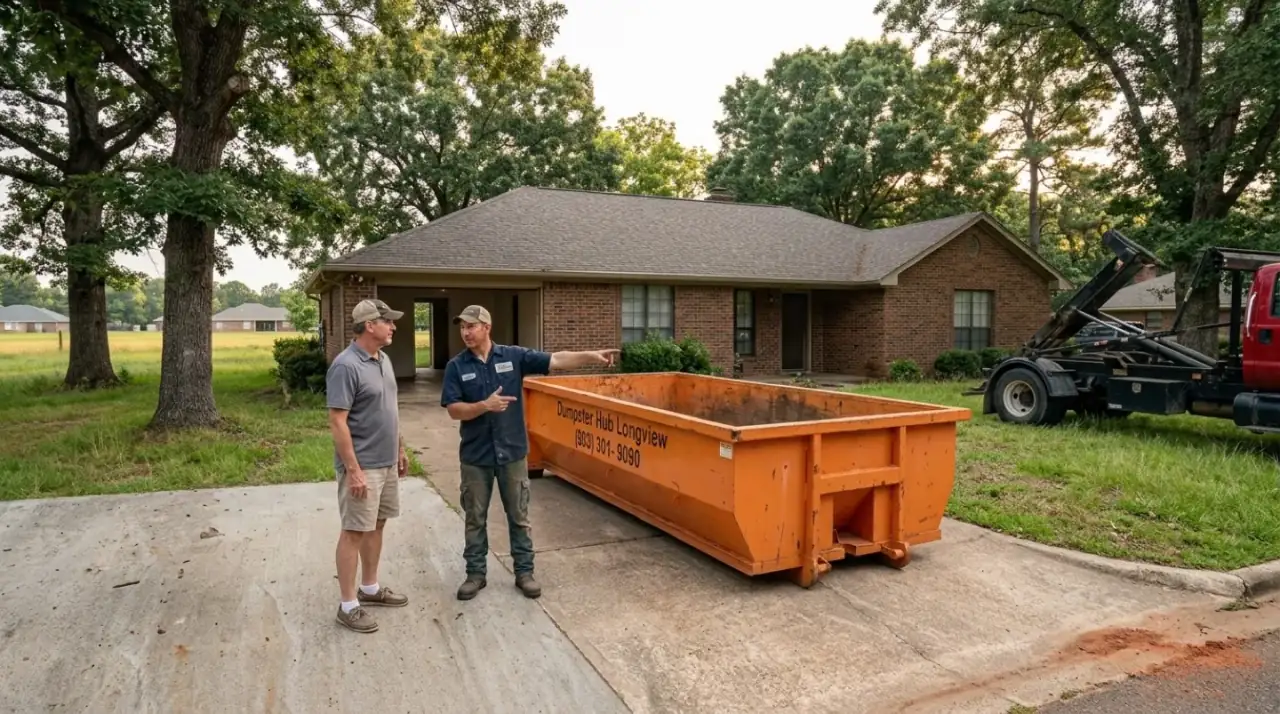
Clear a level surface long enough for the container — at least 20 feet of length for a 10-yard, longer for 20 and 30-yard containers. Remove any vehicles, low-hanging branches, or utility lines from the planned drop zone.
Know whether the container is going on a private driveway or a public street. A street placement in Longview may require a permit from the City of Longview Public Works Department — a private driveway placement avoids that step entirely. See the Longview dumpster permit guide for detail.
What if I do not know exactly what size I need?
Tell us your debris type and how much you estimate you have — we will recommend the right container. The two inputs that matter most are debris type (heavy vs. light) and rough volume (how many pickup truck loads).
If you underestimate and fill early, a swap or second container is available — but picking the right size the first time is always cheaper. Our dumpster rental guide covers size selection by project type.
Can I change my delivery date or address after booking?
Changes are accommodated when the route has not been locked. Call as early as possible — the further in advance, the more flexibility we have. Date changes on the day of delivery depend on whether the truck has already been dispatched.
Pricing & What's Included
What does the base rental price include?
The base rate covers container delivery to your Longview address, the 7-day rental period, the included tonnage confirmed at booking, and final pickup and disposal at the landfill. There are no separate delivery fees, pickup fees, or fuel surcharges inside the standard Gregg County service area. The rate is all-in.
Current base rates: 10-yard from $325, 20-yard from $450, 30-yard from $650. See the full pricing and cost breakdown.
Why is your price different from what I found on a national website?
National dumpster rental platforms display rates drawn from national average data — not Gregg County tipping fees, East Texas haul distances, or local fuel costs. A quote from a national aggregator for a Longview, TX address is typically built on pricing from a market hundreds of miles away.
Our rates reflect what it actually costs to run a roll-off in East Texas: TCEQ-permitted landfill tipping fees, East Texas diesel, and the specific tonnage structures that apply in Gregg County. The full explanation is in our Longview pricing guide.
Are there hidden fees I should watch for?
The base rate is all-in for delivery, 7 days, included tonnage, and pickup. Charges beyond the base rate appear only when specific things happen:
- Overage tonnage fee — debris weighs more than the included tonnage, billed per ton above the limit
- Extended rental daily rate — container stays past the rental period end date
- Trip fee — driver arrives for pickup but cannot complete it due to overfill or blocked access
- Contamination fee — a prohibited item is found at the landfill
None of these are automatic. All are avoidable with the right size selection and a clear access path.
What triggers an overage tonnage charge?
The container is weighed at Pine Hill Landfill after pickup. Any weight above the included tonnage stated in your rental agreement is billed at the per-ton overage rate, rounded up to the next half-ton.
Roofing shingles, concrete, and tile are the most common sources of overage because they reach the tonnage ceiling before the container looks full. Telling us your debris type at booking lets us confirm the right tonnage allowance upfront — eliminating the overage before it can happen.
Is a deposit required to book?
Payment is collected at booking. We accept major credit and debit cards. Full payment at booking confirms the delivery slot and locks in the quoted rate.
Is renting a dumpster cheaper than hiring a junk hauler in Longview?
For projects that generate more than one truck load of debris — most renovations, estate cleanouts, roof tear-offs, and construction demo — a dumpster is cheaper per pound of debris removed. Junk haulers charge by the load or by the hour; two loads from a hauler typically costs more than the base rate on a 20-yard dumpster.
Junk haulers make more financial sense for a single-item pickup — one appliance, one couch — when you cannot do any loading yourself. The full comparison is covered in the pricing guide.
Do you charge more for heavy debris like concrete or roofing shingles?
Container rates are the same across debris types, but the tonnage allowance built into the base rate differs. Concrete, masonry, and asphalt shingles reach the weight ceiling faster than mixed residential debris, so the included tonnage is calibrated accordingly at booking.
Tell us your debris type when you call and we confirm whether the standard tonnage covers your estimated load — or whether a different container choice makes more financial sense.
Container Sizes
What size dumpster do I need for a home cleanout?
For most residential home cleanouts in Longview — furniture, appliances, general household items — a 20-yard dumpster is the right size. It holds roughly six pickup truck loads of mixed debris and handles the volume of a standard home without approaching the weight limit.
A large multi-room estate cleanout with heavy furniture and appliances may require a 30-yard container or multiple pulls.
What size dumpster is best for roofing shingles?
A 10-yard container is correct for most single-layer roofing tear-offs in Gregg County. Asphalt shingles are weight-limited: a 2,000-square-foot single-layer tear-off produces 7,000 to 10,000 pounds of material — filling a 10-yard container to its weight limit while leaving it visually less than half full.
A 20-yard container adds cost without adding usable weight capacity for that debris type. For a two-layer tear-off or a roof over 2,500 square feet, a second 10-yard container or a swap is the right call. Full detail is in the roofing dumpster guide.
What is the difference between a 10, 20, and 30-yard dumpster?
- 10-yard — from $325: ~12 ft long, 2-ton limit. Three pickup truck loads. Best for weight-limited debris: roofing shingles, concrete, tile demolition.
- 20-yard — from $450: ~22 ft long, 3-ton allowance. Six pickup truck loads. Most commonly rented size in Gregg County — handles renovations, home cleanouts, mixed debris.
- 30-yard — from $650: ~22 ft long, 4-ton limit. Nine to ten pickup truck loads. Large-volume projects: whole-house renovations, commercial site cleanouts.
The selection rule: choose by weight for dense debris (concrete, shingles); choose by volume for light, bulky debris (furniture, drywall, lumber).
What does "cubic yards" mean — how do I estimate my debris volume?
A cubic yard is a cube of space measuring 3 feet × 3 feet × 3 feet — 27 cubic feet total. One standard pickup truck bed holds approximately 2 cubic yards of debris when loaded level to the rail.
So a 10-yard dumpster holds roughly 5 pickup truck loads by volume — though the weight limit often binds before the volume limit for dense materials like concrete and shingles. The fill guide covers volume and weight benchmarks by debris type.
Can I overfill the dumpster above the rim?
No. Debris must be level with or below the top rail of the container. DOT regulations prohibit the transport of overfilled roll-off containers on Texas roads. If the container is overfilled when the driver arrives for pickup, the driver will leave without picking it up — and a trip fee applies. Material must be removed until the load is within transport limits before we can reschedule.
What happens if I fill the container before my rental period ends?
Call us. We can schedule an early pickup and, if the project is still ongoing, deliver a second container. The most efficient approach for projects with uncertain debris volume is to call as the container fills rather than guessing at the end date — earlier notice gives us more flexibility on the same-day or next-day schedule.
Rental Period & Extensions
How long is the standard rental period?
The standard rental period is 7 days from the delivery date. This covers most residential renovation projects, estate cleanouts, and roof tear-offs in Gregg County. If your project needs more time, extensions are available at the daily rate in your rental agreement — arrange them before the period expires.
How do I extend my dumpster rental?
Call before the rental end date. Extensions are a standard add-on billed at the daily rate in your agreement. An extension requested while the rental is current is a routine, one-call process. A pickup rescheduled after the rental period has already lapsed involves additional steps — and potentially a re-delivery fee depending on the gap.
What happens if my project runs longer than planned?
Call as soon as you know the project is running over — not at the end date, and not after it. A one-call extension before expiry is always simpler and less expensive than managing a lapsed rental. Most Longview projects that run over do so by a few days; a short extension at the daily rate is a minor cost. Waiting until after expiry is where it becomes a more complicated conversation.
Can I get the dumpster picked up early?
Yes. Call and we will schedule an earlier pickup window. There is no fee for early pickup — the project finished early, the container goes back, and your invoice reflects the quoted rate. The more notice you give us, the easier it is to fit the pickup into the same-day or next-day route.
Is there a minimum rental period?
The standard 7-day rental is the base unit — there is no shorter-term rental. Most projects in Longview that need a dumpster for less than 7 days book the standard period regardless; it is the most cost-effective option and allows for schedule flexibility if the project takes longer than expected.
What Can Go In
What types of debris are allowed in the dumpster?
Permitted debris includes general household items, furniture, renovation materials (drywall, lumber, flooring, cabinets), yard waste and brush, roofing shingles, concrete and masonry (in a dedicated 10-yard container), most appliances, and clean construction and demolition debris.
The core rule: debris must be non-hazardous and accepted at a TCEQ-permitted landfill. The full permitted and prohibited item list is in the what can go in a dumpster guide.
What is not allowed in the dumpster?
Prohibited items include:
- Hazardous household chemicals — paint, solvents, pesticides, motor oil
- Asbestos-containing materials (requires certified abatement disposal)
- Medical or biohazardous waste
- Batteries — lithium and lead-acid
- Refrigerant-containing appliances — refrigerators, freezers, AC units, dehumidifiers
- Tires
- Propane tanks
- Wet or liquid concrete
These items trigger contamination fees at the landfill and in some cases TCEQ regulatory penalties. If you are unsure whether something is permitted, call before loading it.
Can I put old appliances in the dumpster?
Most appliances are permitted — washers, dryers, microwaves, dishwashers, and stoves can go in. Refrigerators, freezers, air conditioners, and dehumidifiers are prohibited. These appliances contain refrigerants that require certified disposal under EPA Section 608 regulations.
For refrigerant-containing appliances, call us and we will point you to the appropriate East Texas appliance disposal option. See the full appliance disposal guide for Longview.
Can I put concrete, brick, or soil in the dumpster?
Yes — but only in a 10-yard container rented specifically for heavy debris. Concrete, brick, asphalt, and soil are extremely dense: a 10-yard container reaches its 2-ton limit with far less material than it appears. Concrete runs approximately 4,000 pounds per cubic yard.
Never mix concrete or soil with light debris in a general-purpose 20 or 30-yard container. Tell us at booking if your load includes concrete or masonry so we can confirm the right container and tonnage allowance. More detail in the concrete dumpster guide.
Can I put roofing shingles in the dumpster?
Yes. Asphalt shingles are an accepted debris stream at Pine Hill Landfill — no sorting required on your end. The key issue is weight management: shingles are heavy, and a standard tear-off fills a 10-yard container's weight limit before it fills by volume.
Confirm your roof size and layer count at booking so we can size the container and tonnage allowance correctly. Full detail in the roofing dumpster guide.
Can I put tires, batteries, or electronics in the dumpster?
No. Tires, all battery types (car batteries, lithium batteries), and electronics (TVs, computers, monitors, printers) are prohibited from roll-off containers. These items require separate disposal through TCEQ-compliant recycling streams. East Texas tire recycling and electronics disposal programs exist in the Longview area — call us if you need direction on the right local resource.
What happens if a prohibited item ends up in my load?
If a prohibited item is identified in the load at the landfill, a contamination fee is assessed. The landfill charges the hauler for handling the prohibited material; that cost passes through to the renter. The most common contamination calls come from refrigerant-containing appliances mixed into a general debris load.
The contamination fee can be significant — and it is far easier to prevent than to dispute after the fact. If you are unsure whether an item is permitted, call before loading it. A 30-second call is always cheaper than a contamination fee.
Project-Specific Questions
Which dumpster is best for a kitchen or bathroom renovation?
A 20-yard container handles most kitchen and bathroom renovations in Longview homes. Cabinets, countertops, tile, drywall, and plumbing fixtures are bulky but not dense — the volume ceiling is reached before the weight limit. The 20-yard's 3-ton allowance is adequate for mixed renovation debris without concrete subfloor demo.
If the project includes concrete floor demolition, call and we will confirm whether a 10-yard dedicated heavy-debris container should run alongside the 20-yard. More in the renovation dumpster guide.
Which dumpster is best for a full home or estate cleanout?
A 20-yard dumpster handles most single-family home cleanouts in Gregg County — furniture, clothing, general household goods, and light appliances. A large multi-room estate cleanout with several rooms of heavy furniture may require a 30-yard container or multiple pulls depending on volume.
Call and describe what rooms you are clearing — we can give you a size recommendation based on what we have seen from comparable Longview properties.
How many dumpsters do I need for a roof tear-off?
For most Longview homes — a single-layer tear-off under 2,500 square feet — one 10-yard dumpster is the right call. A two-layer tear-off or a roof over 3,000 square feet typically requires two 10-yard containers or a swap after the first is full.
Never use a single 20-yard container for shingles — the weight limit hits long before the volume is used, making the extra volume useless and the extra cost unnecessary. Full detail in the roofing dumpster guide.
What size do I need for concrete or masonry demolition?
A dedicated 10-yard container for concrete is the standard for masonry demolition in East Texas. Concrete is approximately 4,000 pounds per cubic yard — a 10-yard container reaches its 2-ton limit quickly, well before it appears full.
For large concrete projects — full slab removal, retaining wall teardown, foundation work — multiple pulls or a staged arrangement is the right approach. Never mix concrete with light debris in a general-purpose container.
Do you rent dumpsters to commercial and construction job sites?
Yes. We serve commercial contractors, renovation crews, and construction job sites across Gregg County and East Texas. Long-term rental arrangements and multiple-pull contracts are available for ongoing site needs. Call to discuss commercial pricing and scheduling.
Local Rules & Permits
Do I need a permit to put a dumpster on the street in Longview, TX?
If the container is on public right-of-way — the street, sidewalk, or the curb strip in front of your property — a permit from the City of Longview Public Works Department is required before placement. Private driveway placements do not require a permit.
In most Longview residential situations, a driveway or yard placement avoids the permitting step entirely. If street placement is necessary for your project, the Longview dumpster permit guide covers the full process.
Can the dumpster go on my driveway?
Yes, and it is the preferred placement in Longview. A concrete or asphalt driveway handles the container weight without damage in most cases. Wooden decking, paver surfaces, and thin asphalt can crack under the loaded container weight.
If you have any concern about your driveway surface, flag it at booking — we can discuss placement options, plywood protection boards, or alternative drop zones that avoid the concern.
My HOA has rules about dumpsters — what should I know?
HOA restrictions in Longview neighborhoods vary. Common restrictions include requiring the container on a private driveway (not visible from the street), limiting the visible rental period, or requiring advance HOA approval before placement.
Review your HOA covenants before booking. If street placement is the only option and your HOA prohibits visible containers, call us — we can discuss whether a shorter rental window or a rear-access placement resolves the conflict.
Are there weight or access concerns with the delivery truck?
The roll-off truck placing the container weighs approximately 50,000 to 60,000 pounds when loaded. Residential streets in Longview are built to standard traffic loads, but cul-de-sacs, private roads, and some older neighborhood streets have tighter constraints.
If you have concerns about truck access — a tight turn, a narrow gate, a low-clearance structure, or a road with weight restrictions — flag it at booking. We can assess the route and confirm access before dispatch.
Do you serve rural addresses outside Longview city limits?
Yes. We serve rural addresses in Gregg County and neighboring counties including Rusk, Upshur, and Harrison. Delivery availability and timing may vary for remote rural addresses or unpaved routes.
Call with your zip code and address to confirm your location is within our delivery area and to discuss scheduling. We also serve all of Gregg County as a standard service area.
Pickup & After
How do I schedule pickup?
Pickup is automatically scheduled at the end of your 7-day rental period — no action required on your end for the standard pickup. If you want early pickup, call us and we will adjust the schedule. If you need an extension, call before the end date to add days at the daily rate. Do not wait until after the rental expires to make either call.
What happens when the dumpster is picked up?
The driver arrives at the scheduled window, secures the load, and hauls the container to Pine Hill Landfill. The load is weighed at the facility against the included tonnage in your rental agreement. If the weight exceeds the included tonnage, the overage is calculated at the per-ton rate and billed. For rentals with correct size selection and debris type confirmed at booking, the final invoice matches the quoted rate exactly.
What if my dumpster is overfilled at pickup?
If debris extends above the top rail of the container, the driver cannot legally haul it on Texas roads. The driver will leave the container on-site, and a trip fee applies for the attempted pickup. You will need to remove material until the load is at or below the rail, then call to reschedule. Save yourself this situation by loading level throughout the rental — if the container is getting full, call us before you run out of room.
What is a contamination fee and what triggers it?
A contamination fee is assessed when a prohibited item is identified in the load at the landfill. The facility charges the hauler for managing the prohibited material; that cost passes directly to the renter. The most common trigger is a refrigerant-containing appliance — a refrigerator or window AC unit — mixed into a general debris load.
The contamination fee can be substantial, and it cannot be reversed after the load is processed. The prevention is simple: if you are unsure whether an item is permitted, call us before loading it.
Can I add more items after I schedule pickup?
Yes, as long as the container has not been picked up yet. If you have scheduled pickup and then realize you have more debris to add, call us — we can push the pickup window as long as the rental period has not expired and the driver has not been dispatched. After dispatch, changes depend on route status.
This dumpster rental FAQ answers the questions that come up most often before and during a Gregg County rental — from container sizing and flat-rate pricing to prohibited items, permit requirements, and what happens at pickup. If your common dumpster rental questions are not covered in the 46 answers above, call directly and describe your project. A five-minute conversation before booking resolves more uncertainty than any FAQ page can, and we can confirm sizing, weight, and delivery specifics for your exact address and debris type. Contact us to get started, or learn more about us and how we operate as a local Longview hauler.
Still Have Dumpster Rental Questions?
We can answer any question about your specific project, debris type, or delivery location in a few minutes by phone — no hold music, no national call center.
Get an Instant Quote
Serving Greater Longview
Longview, Kilgore, White Oak, Hallsville, Marshall and surrounding East Texas
Office Hours
Mon - Fri: 7:00 AM - 6:00 PM
Sat: 8:00 AM - 2:00 PM