
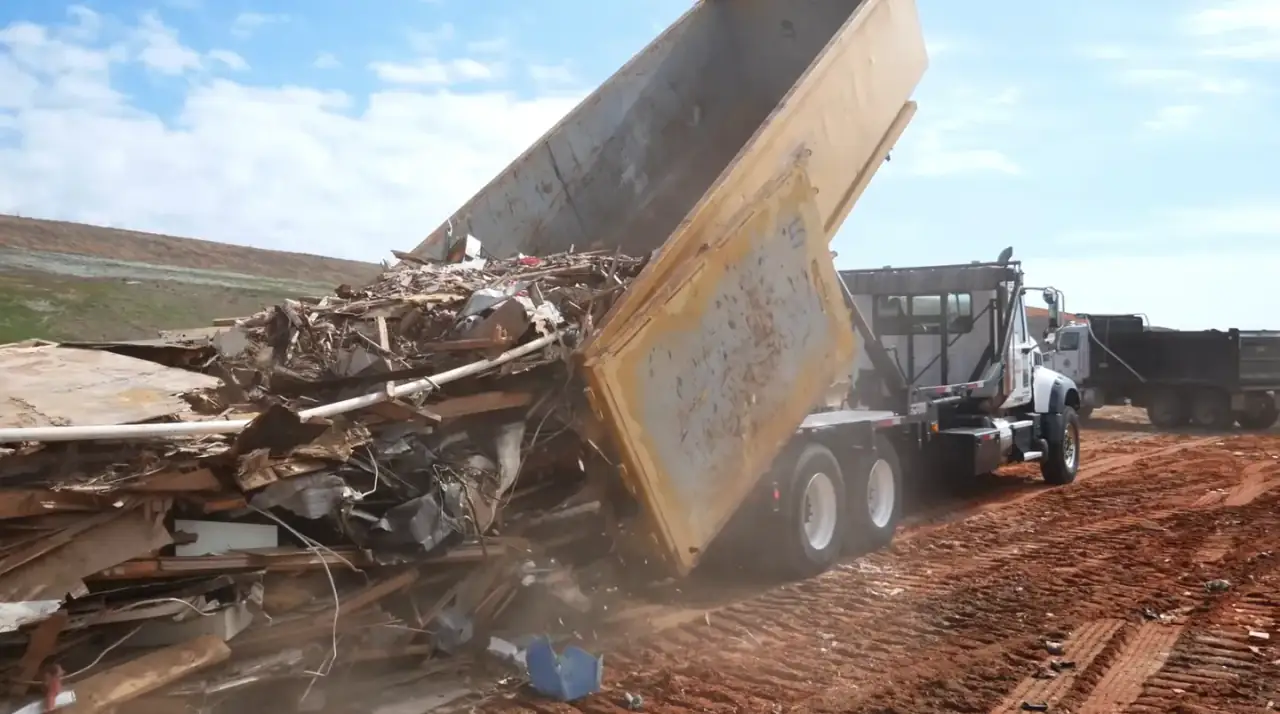
Storm cleanup dumpster rental in Longview TX has two consistent failure points: 888-number dispatch that hedges on availability after the call volume spikes, and day-rate billing that stacks up during a three-week insurance timeline. Longview has logged 19 confirmed severe weather events since July 2024 — nearly one per month, with hail and high-wind events concentrated March through June. The April 2, 2023 storm brought 1.75-inch hail and 60 mph winds across Longview, White Oak, Hallsville, and Kilgore and generated one of the largest single-event cleanup surges Gregg County had seen. Homeowners who called 888-number rental services after that storm encountered a standard disclaimer: "emergency delivery depending on availability." Local inventory depletes within 24 hours when every household in the affected area is calling simultaneously. The second problem came later: homeowners who booked day-rate services found a three-week cleanup during insurance processing — standard on larger claims — cost $850 or more once daily charges stacked up on top of the base rate. Storm cleanup needs a flat weekly rate from a truck that dispatches from Gregg County, not a hold line that hedges on availability after the call volume spikes.
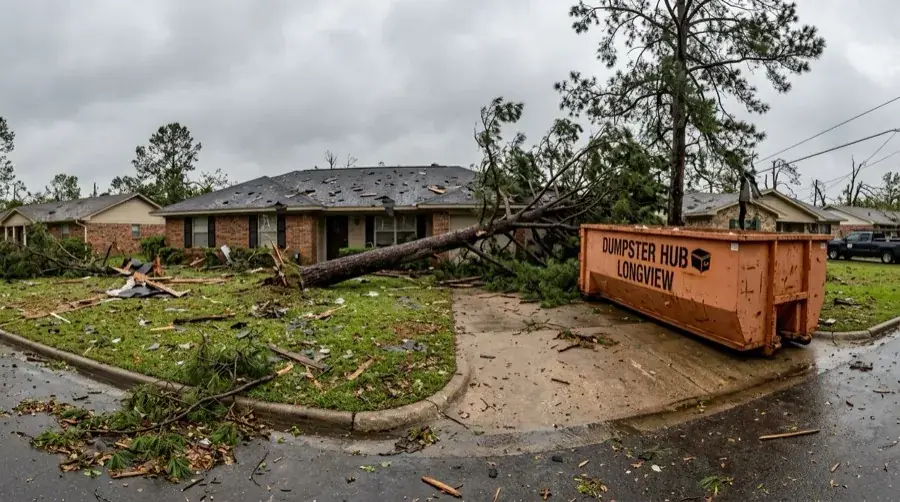
Document before you load anything
Before a single piece of debris goes in the container, walk the entire property with a phone or camera. Photograph every area where storm damage occurred: the roof, fallen trees or branches, structural damage to fencing, outbuildings, vehicles, and any ground disturbance from uprooting. A video walkthrough of the full property — especially the roof — adds documentation that photographs alone sometimes miss when an adjuster starts looking for evidence of pre-existing conditions versus storm damage.
Save the originals locally. Do not rely solely on cloud backup during the insurance process. Your adjuster will request documentation and may compare it against their own inspection. Timestamped originals on a phone or local drive provide a stronger record than a shared album. This step costs nothing. Skipping it can reduce or eliminate a claim.
Storm just happened? Call now to get on the schedule.
Containers move fast after a storm. Call before you have a final size — we confirm at delivery.
Storm Debris Removal in Longview TX — Trees vs. Structural Loads
East Texas storms generate two distinct types of debris, and they behave very differently in a roll-off container. Understanding the difference determines your container size.
Tree debris from loblolly pine and oak — the dominant species across Gregg County — is bulky but relatively light. A large loblolly that comes down in a yard leaves an enormous pile of branches and trunk sections. The challenge is volume: it almost always needs a 30-yard container even when total weight is modest, because of how much space the material occupies.
Structural debris from roof damage, broken framing, siding, windows, and damaged outbuildings is heavier per cubic foot. A mix of tree and structural debris in the same container is common and accepted. The structural components drive the weight calculation; the tree debris drives the volume calculation.
The root ball of a mature East Texas pine is its own category. When a large tree falls, it pulls a 4 to 6-foot disc of soil with it — soil that is significantly heavier per cubic foot than the tree itself. When multiple large trees came down, estimate root ball weight separately when sizing the container.
Sizing for storm cleanup
Storm cleanup almost always requires a 30-yard. Tree debris alone justifies it on volume. Add structural damage and the container fills faster than expected. The two-container question comes up when a property has both significant tree fall and substantial roof or structural damage — in that case, call us with the scope and we will build the right sequence.
20-Yard From $450
22 × 8 × 4.5 ft · 3-ton limit · 7 days
- Minor hail damage — shingles and gutters only
- Small tree fall, single property, no trunk
- Fence damage + light debris, single structure
30-Yard From $650
22 × 8 × 6 ft · 4-ton limit · 7 days
Right Size for Most Storm Jobs
- Any large tree fall — loblolly pine, oak
- Roof damage + tree debris combined
- Multiple structures or outbuildings affected
- Scope uncertain — always size up on storms
What homeowners insurance covers in Texas
Standard homeowners policies in Texas generally cover debris removal from a covered peril — wind, hail, tree impact — when the debris is on the insured property and was caused by the covered event. The sub-limit on debris removal is typically 5 percent of the Structure A dwelling limit. Read the declarations page for your specific percentage before assuming full coverage.
What most policies do not cover: debris removal costs that exceed the sub-limit, costs for debris from trees that fell onto a neighbor's property, and any costs incurred before the claim is filed. Submit all receipts — including the dumpster rental receipt — as a debris removal expense when the claim is filed. The adjuster applies it against the applicable sub-limit. Every dumpster rental Longview customer gets a receipt for the job; if you need a duplicate for an older job, call us.
When FEMA Individual Assistance is activated for Gregg County following a major event, dumpster rental costs may qualify under the Other Needs Assistance category. Gregg County has received federal disaster declarations following past severe weather events — when a declaration is active, check disasterassistance.gov to apply. Keep all receipts regardless; the documentation requirement is the same either way.
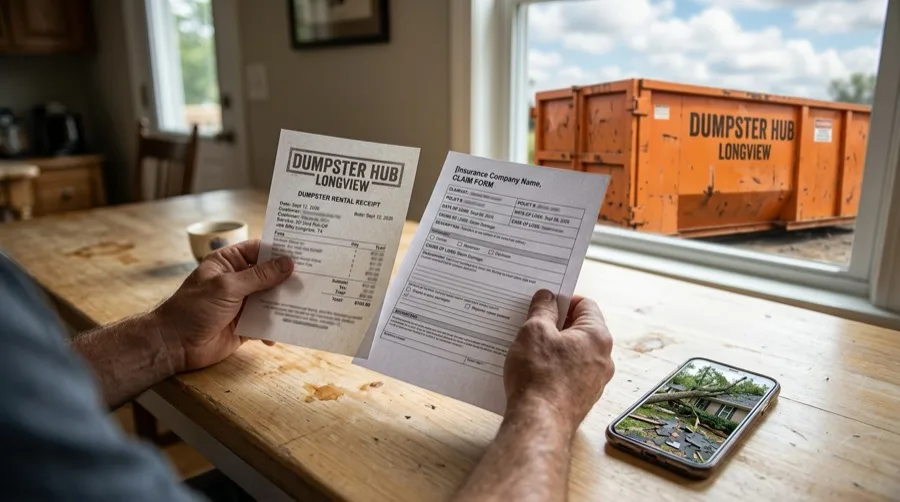
Need a receipt formatted for your insurance claim?
Every job includes a receipt. Call for a duplicate on any prior delivery.
Debris Removal Dumpster in Longview TX — Tree vs. Structural Load
Storm cleanup dumpster rental in Longview TX starts with one call — placed as early as possible, before you have a final debris count. Local inventory depletes fast when all of Gregg County is calling at once. Tell us what you can see and we put you on the delivery schedule; size is confirmed the morning of drop. Every job includes a receipt formatted for insurance submission. For dumpster rental for storm cleanup in Longview TX that needs to hold through an adjuster visit, call at day 5 or 6 to extend — no new paperwork, no penalty for finishing early.
Frequently Asked Questions
Does homeowners insurance cover dumpster rental after a storm in Texas?
Most standard homeowners policies include debris removal coverage as part of the dwelling limit, typically 5 percent of Structure A. File your claim first, document costs with receipts, and submit the dumpster rental as a debris removal expense. When FEMA Individual Assistance is activated for Gregg County, costs may also qualify under Other Needs Assistance. Keep all receipts regardless.
How quickly can you deliver after a storm in Longview?
Same-day delivery is available for orders placed before noon. After a major storm event in Gregg County, containers from all providers move fast — the earlier you call, the better the availability. Call to get on the schedule even before you have confirmed the size. We can adjust at delivery confirmation or the morning of drop.
What size dumpster do I need for storm cleanup?
For a single residential property with tree damage and no structural impact, a 30-yard handles most cleanups. East Texas loblolly pines generate enormous volumes of bulky debris — size for volume even when total weight is moderate. Roof damage in addition to tree debris or multiple affected structures means planning for a second container or a swap.
What if my cleanup takes longer than 7 days during insurance processing?
Extended rentals are available. Insurance timelines on larger storm claims frequently run two to three weeks before an adjuster inspects and authorizes debris removal. Call at day 5 or 6 to confirm the extension — we hold the container at a per-day rate with no paperwork required. There is no penalty for finishing early.
Can I call before I know the full extent of the damage?
Yes — and you should. After a major storm, getting on the delivery schedule early is more important than having a confirmed size. Call as soon as possible, describe what you can see, and we will put you on the calendar. Final size confirmation happens at delivery, not when you book.
What happens if my insurance adjuster delays the cleanup past the rental period?
Call us at day 5 or 6 to confirm an extension. Insurance adjuster timelines on larger storm claims in Texas frequently run two to three weeks before a site inspection and debris removal authorization. We hold the container at a per-day rate with no new paperwork. On storm jobs, the 7-day rental clock starts on delivery — not when your adjuster visits. Factor that into your timeline when filing the claim so you are not paying per-day charges during the adjuster wait.