
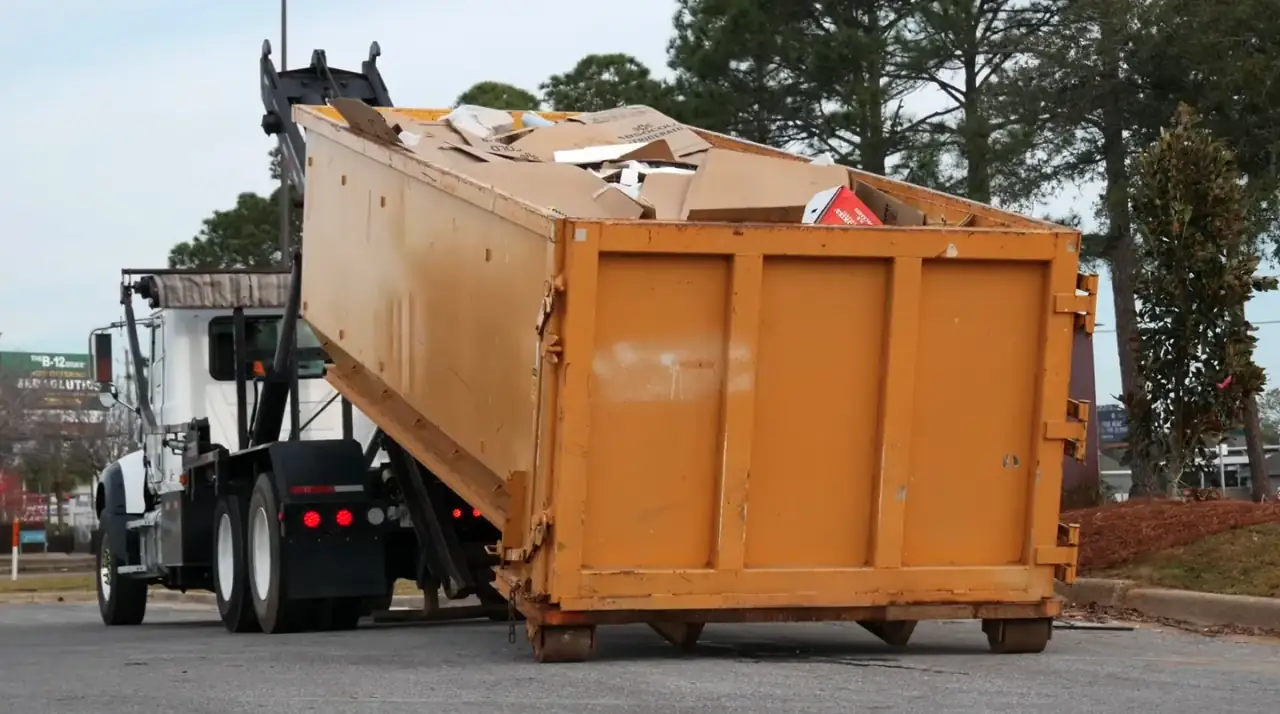
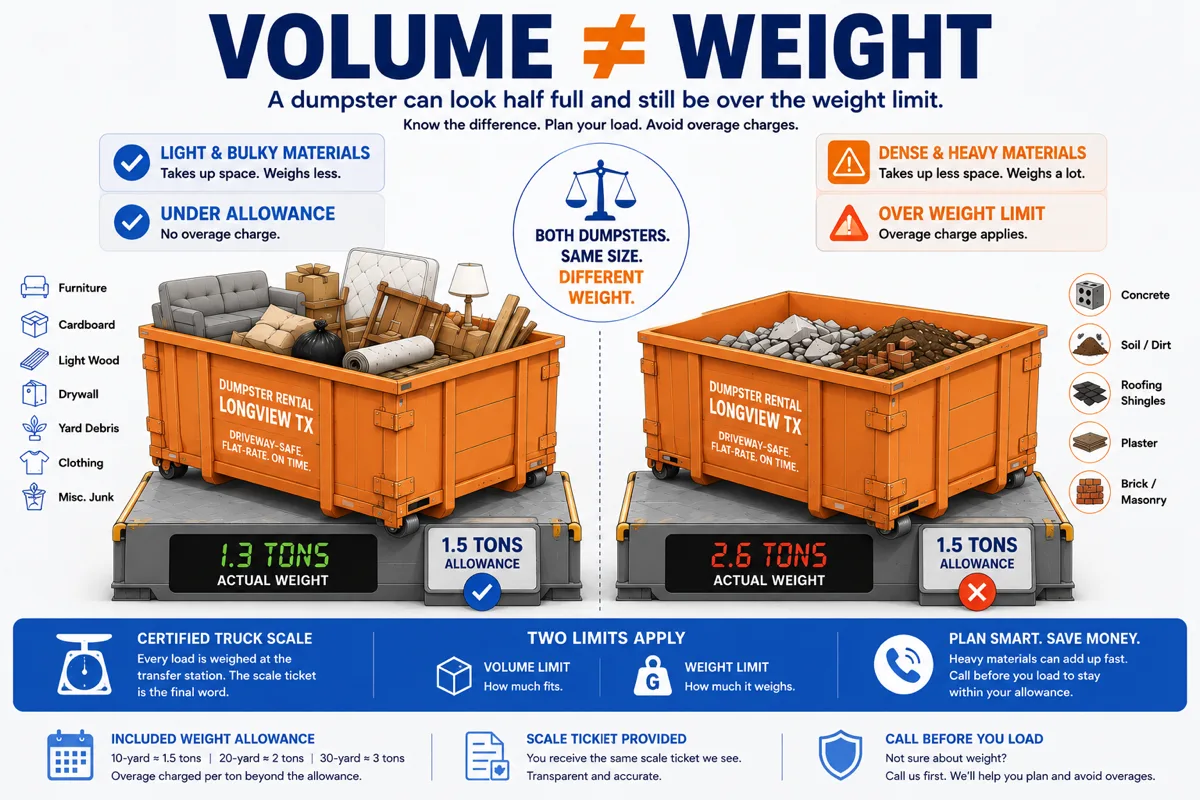
The dumpster weight limit in Longview, TX is the number that determines whether your rental stays on budget. Every roll-off rental includes a weight allowance — the tons included in your flat-rate price. If the load weighs more than that allowance at the landfill scale, an overage charge applies per ton beyond the limit. Most residential jobs (furniture, junk, drywall, light wood) stay under the limit without any special attention. A small number of materials — concrete, shingles, soil, plaster — are heavy enough to push a mixed load into overage territory even when the container is only half full. Knowing which materials carry that risk changes how you plan the job.
Roll Off Dumpster Weight Limit in Longview, TX: How It's Measured
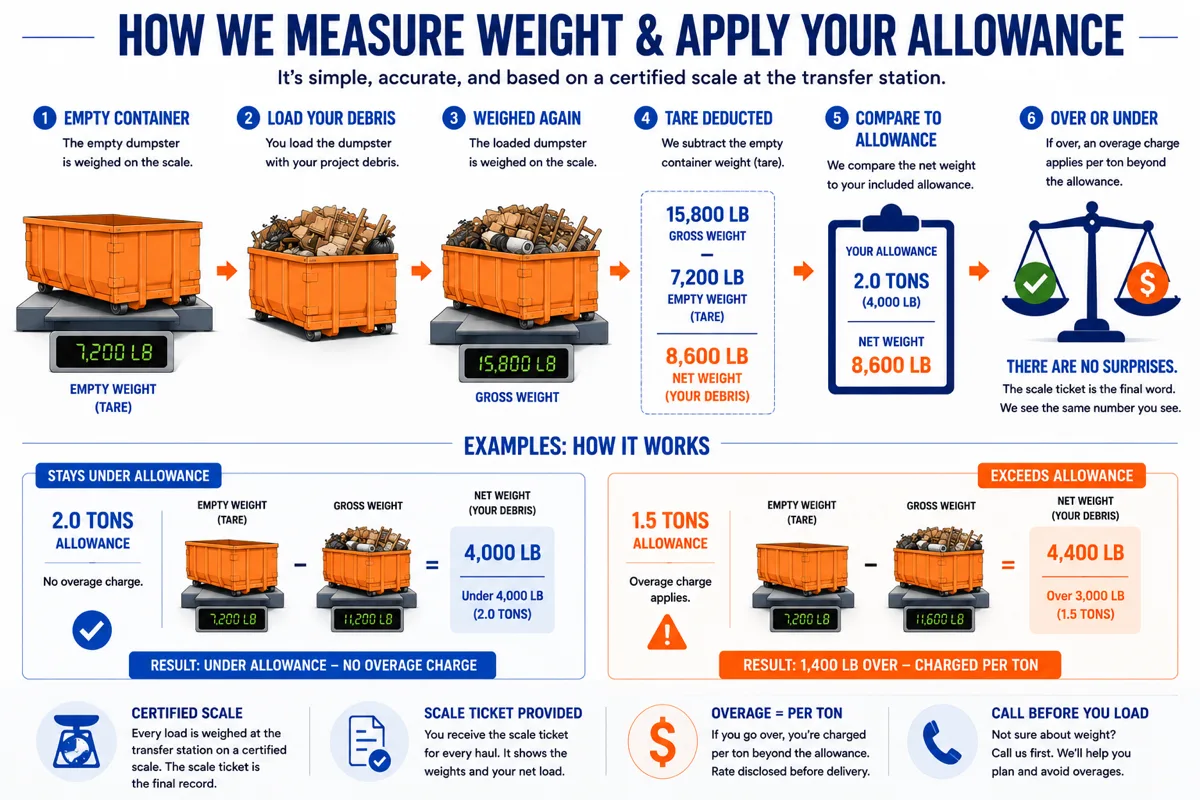
The weight allowance is the number of tons included in the rental price. When the container is picked up and hauled to Pine Hill Landfill, it is driven across a certified scale. The weight of the empty container is subtracted from the gross weight. The net weight is the weight of your debris. If that net weight is under the allowance, no additional charge. If it is over, you pay the per-ton rate for the excess.
The scale ticket is the definitive record. We see the same number you would see. There is no flexibility in what the scale reads, which is why it is worth thinking about weight-heavy materials before you load them rather than after.
How Much Can a Dumpster Hold in Longview, TX? Weight by Size
Weight allowances vary based on the container and local disposal rates. Larger containers do not always include proportionally more weight — they are sized for volume, not weight. The general pattern:
A 10-yard container is suited for light, bulky debris — furniture, household junk, light wood, yard debris. It carries the smallest weight allowance of the three sizes.
A 20-yard container handles mixed residential and renovation debris. The weight allowance accounts for typical mixed loads including some drywall, flooring, and light construction material.
A 30-yard container is the largest residential option. The allowance is larger, but so is the temptation to load heavy material because there is room for it. Volume capacity and weight capacity are different limits — both apply.
Call to confirm the specific allowance for each size before booking. Allowances follow the per-ton disposal rates at Pine Hill Landfill, which its operator, Republic Services, sets and updates periodically.
The heavy materials — what to watch for
Three categories of material cause the majority of weight overages. Quick reference before the detailed breakdown:
| Material | Approx. weight | Overage risk |
|---|---|---|
| Concrete (broken rubble) | ~4,000 lbs / cubic yard | Extreme — hits 2-ton limit at ~1 yard on a 10-yard container |
| Soil / fill dirt | ~2,700 lbs / cubic yard | High — East TX clay heavier when wet |
| Asphalt shingles | 350–400 lbs / roofing square | High — 30-square roof = 4–6 tons |
| Plaster walls (3-coat) | ~10 lbs / sq ft | High — 3–4× heavier than drywall |
| Wet grass / clippings | 400–800 lbs / cubic yard | Moderate — watch large volumes |
| Standard drywall | ~2.5 lbs / sq ft | Low |
| Mixed household / furniture | 200–400 lbs / cubic yard | Low — rarely causes overages |
Weight allowances: 10-yard ≈ 2 tons, 20-yard ≈ 3 tons, 30-yard ≈ 4 tons. Overage is $65 per ton beyond the allowance using the certified scale ticket from Pine Hill Landfill.
Concrete and masonry: Concrete weighs approximately 4,000 pounds per cubic yard in rubble form. Old Gregg County slabs are sometimes denser than modern pours, running slightly heavier. A small patio demo — 10 feet by 12 feet, 4 inches thick — generates roughly 2 tons of concrete. That is a significant portion of any standard weight allowance on its own. Concrete should be either loaded lightly in a mixed container or handled as a separate concrete-only load where weight-based pricing applies from the start. See the concrete dumpster rental page for a full breakdown.
Roofing materials: Asphalt shingles weigh 250 to 400 pounds per square (a 10 x 10 foot area), depending on the type. Three-tab shingles are at the lighter end; architectural (dimensional) shingles are heavier. A 30-square residential roof with a single layer generates 4 to 6 tons of shingle debris. Two-layer roofs double that number. Roofing loads nearly always exceed the standard weight allowance. When the whole job is a roof tearoff, plan on per-ton pricing beyond the included allowance. See the roofing dumpster rental page for the full weight calculation.
Soil and fill dirt: Dry soil weighs approximately 2,700 pounds per cubic yard. Wet East Texas clay — the kind found in most of Gregg County below the topsoil layer — is heavier. A seemingly small volume of soil added to an otherwise light container load can push the total weight significantly. Soil from landscaping or excavation should be called out at booking so we can advise on whether it fits within the allowance or needs a separate load.
Plaster walls: Older Gregg County homes built in the 1950s and 1960s frequently have original plaster walls rather than drywall. Plaster is three to four times heavier than drywall by volume — roughly 10 pounds per square foot for a three-coat plaster system versus 2.5 pounds for standard drywall. A full whole-home plaster demo can generate surprising weight. If a renovation involves plaster removal, factor weight into the container sizing decision. See the renovation dumpster rental page for guidance.
Weight calculators — estimate before you load
Use these to estimate how much your heavy material weighs before you book. If the number puts you close to or above the included allowance, call and we will help you plan it out. Estimates are approximate — actual weight depends on moisture content, debris density, and mix.
Concrete & Asphalt
Concrete & Asphalt Weight Calculator
Estimate only. Call to confirm pricing for your load.
Roofing
Shingles Weight Calculator
Roof pitch adds 10–30% to actual area vs. floor plan sq ft.
Mixed loads — the weight math for typical projects
Most residential cleanouts involve light, mixed debris — furniture, clothing, cardboard, light wood, some drywall, yard waste — and stay well under the weight allowance. The risk comes when heavy material is added to a container that was sized for light debris.
A garage cleanout that seems like a light job can become a weight problem if the garage contains stored concrete blocks, old cast iron equipment, car batteries, or engine components. An estate cleanout that includes an old cast iron tub (350 to 400 pounds) plus a chest freezer plus a collection of stored masonry materials can add 1,500 to 2,000 pounds to what otherwise looked like a light load.
The practical rule: if you know heavy material is part of the load, mention it when you call to book. We will let you know whether the allowance covers it or whether we recommend adjusting the size or the plan.
How overage charges work
If the scale ticket shows a weight above the allowance, the overage charge applies to the additional tonnage at a per-ton rate. There are no surprise charges — the rate is disclosed before delivery. The overage is calculated from the scale ticket and invoiced after pickup. You will receive the scale ticket for your records.
The cleanest way to avoid overages: call before you load heavy materials and describe what you are planning to put in the container. We can usually tell you within the call whether it falls inside the allowance or whether we should adjust the approach.
The dumpster weight limit in Longview, TX is not an arbitrary policy — it is tied to certified scale readings at the landfill, Texas road weight regulations, and disposal fee structures that are set per ton. The dumpster rental weight limit is the number that determines whether your invoice stays at the flat rate or adds an overage charge. Understanding it before you load — particularly for concrete, shingles, and soil — prevents the most common extra charge on a Gregg County dumpster invoice. Call before loading any heavy material and describe what you are planning; a two-minute conversation before delivery is easier than disputing a scale ticket after pickup.
Frequently Asked Questions
What happens if I go over the weight limit on a dumpster?
If your load exceeds the included weight allowance, you are charged $65 per ton beyond the limit. The Pine Hill Landfill scale ticket is the definitive number. Overage rates are disclosed before delivery — no hidden charges. The easiest way for our dumpster rental Longview customers to avoid overages is to call with a description of what they are loading so we can estimate the weight before we commit to a size.
How much does concrete weigh in a dumpster?
Concrete weighs approximately 4,000 pounds per cubic yard in rubble form. A container loaded primarily with concrete can reach 20 to 30 tons in a 10-yard container — far beyond any standard allowance. Concrete should be loaded lightly in a mixed container or handled as a dedicated concrete load with weight-based pricing. Never fill a standard dumpster exclusively with concrete.
How much does a truckload of shingles weigh?
A typical 30-square residential roof generates 3 to 6 tons of shingle debris. Architectural shingles weigh 350 to 400 pounds per square; three-tab shingles are closer to 250. Roofing loads nearly always exceed the standard weight allowance and carry per-ton overage charges beyond the included tonnage.
Can I put dirt in a dumpster?
Clean fill dirt is accepted but weighs approximately 2,700 pounds per cubic yard. Small amounts in a mixed load are usually fine. Containers loaded primarily with soil should be discussed at booking — call first so we can advise on weight impact and pricing for your specific load.